Caribou Conservation Decision Support
FERIT and IEG have contributed to the development of integrated modelling tools that support boreal caribou conservation planning by connecting landscape composition, disturbance, climate change, habitat condition, and population response within a unified scenario analysis framework.
This work is designed to help evaluate how alternative land-use and wildlife management strategies may affect long-term caribou conservation outcomes, and to support planning decisions with transparent, quantitative evidence.
CCSP Project Overview
A major application of this work was the CCSP Project Report on Land-use and Caribou Population Simulation for the Churchill, Berens, and Kinloch Caribou Ranges, encompassing the Trout Lake, Lac Seul, and Red Lake forests.
This project was funded by the Province of Ontario under the joint federal-provincial Caribou Conservation Stewardship Program .
The project culminated in a comprehensive web-based decision-support tool for boreal caribou management built on the ALCES Flow simulation platform.
Integrated Modelling Framework
The platform brings together up-to-date information on:
- landscape composition and natural land cover
- anthropogenic footprint and disturbance
- climate change trajectories
- population vital rates
- forest inventory information
- caribou survey and monitoring data
Science advice and data support from the Ontario Ministry of Natural Resources and Forestry, including forest resource inventory and caribou survey information, helped ensure the tool reflected current understanding of habitat condition, disturbance, recruitment, survival, and integrated range assessment context.
Within this framework, users can construct and explore a wide range of land-use, disturbance, and wildlife-management scenarios and evaluate their implications for caribou populations over time.
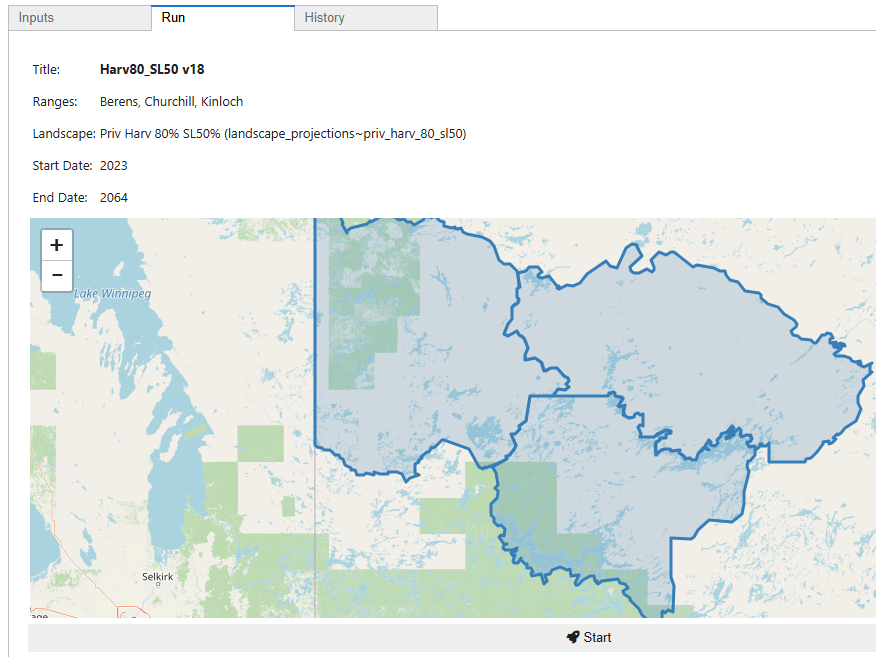
Caribou ranges included in the CCSP project application.
What the Tool Enables
The decision-support platform allows users to evaluate a range of potential management strategies and disturbance pathways, including combinations of:
- forest harvest scenarios
- wildfire and climate-driven disturbance regimes
- road and other development pressures
- wolf control scenarios
- moose management alternatives
- other adaptive management strategies
This supports an adaptive management approach in which the likely consequences of conservation and management actions can be explored and compared before implementation on the ground.
Access and Tools
Public Results Viewer
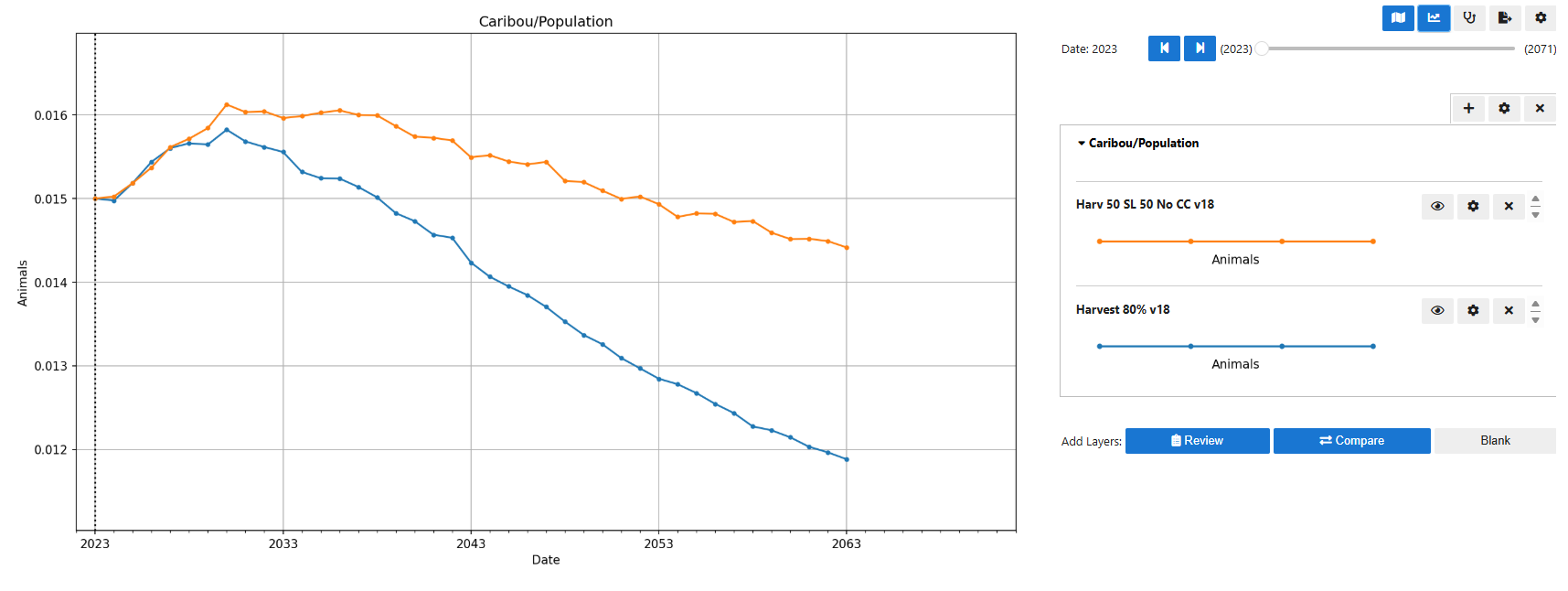
The Caribou Conservation Tool – Public Results Viewer allows users to create custom reports from generated land-use and population simulations.
Protected Development Tool
The Caribou Conservation Tool – Password Protected PopDyn and Landuse Simulation Development Tool provides access to the underlying development environment for simulation and model evaluation.
Tutorials
Tutorials are available to support use of the reporting and simulation components of the tool:
Why This Matters
Effective boreal caribou conservation requires more than mapping habitat conditions. It requires tools that can evaluate how changing disturbance regimes and management decisions influence long-term population outcomes.
FERIT’s work in this area supports a decision-focused approach to conservation planning, helping clients and partners compare scenarios, assess risk, and identify strategies that improve the likelihood of conservation success.